
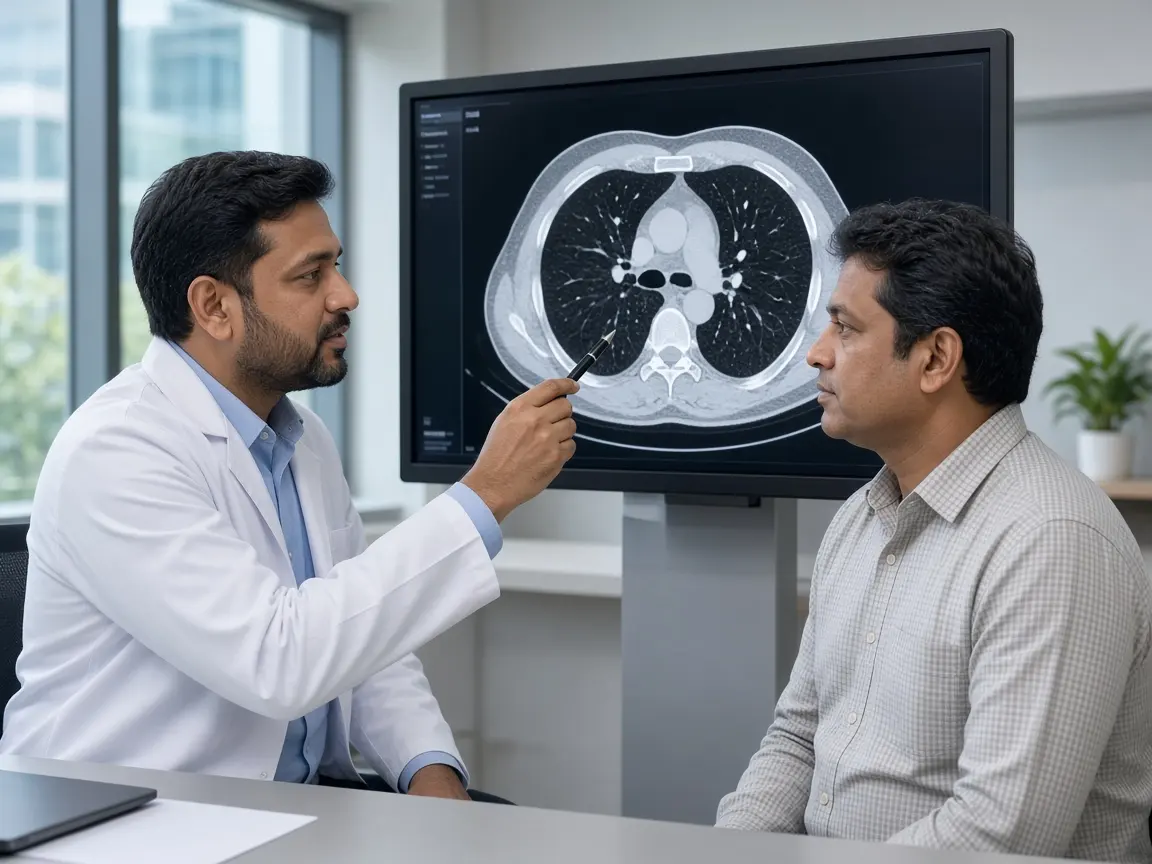
What is lung cancer?
The lungs move oxygen into the blood and carbon dioxide out. Cancer can start in the airways or in the lung tissue itself. The two broad groups are non-small cell lung cancer and small cell lung cancer. They behave differently and are not treated the same way. Non-small cell disease is more common and includes adenocarcinoma, squamous cell carcinoma, and large cell carcinoma. Small cell lung cancer tends to grow and spread faster and is strongly linked to smoking.
A spot on a scan is not a diagnosis. Infection, scarring, and benign nodules can look worrying. Tissue, from a biopsy or sometimes from fluid around the lung, is what confirms cancer and tells the team which group it belongs to. That distinction decides whether molecular tests, immunotherapy, or a chemotherapy-first approach is even relevant.
Who is more likely to develop it?
Tobacco smoke causes most lung cancers. Risk rises with how much and how long a person has smoked, and it falls after quitting, though it does not return to the level of someone who never smoked. Second-hand smoke, radon, some workplace dusts, air pollution, and previous radiation to the chest also contribute. A family history can matter, especially in younger never-smokers. None of this is a reason to blame a person for the illness, and a smoking history should be shared honestly because it changes both risk and some treatment choices.
Never-smokers can develop lung cancer, often adenocarcinoma, and some of these cancers carry gene changes such as EGFR or ALK that matter for tablets. Cough, weight loss, or a nodule found on a scan done for another reason are common routes to diagnosis. Screening with low-dose CT is considered for selected people with a substantial smoking history. It is not offered to everyone, and a normal screen does not explain away a new symptom.
Symptoms that need a clinician
A cough that does not settle, coughing blood, chest pain, breathlessness, repeated chest infections, hoarseness, or unexplained weight loss should be assessed. Shoulder pain, a drooping eyelid, or bone pain can occur when a tumour presses on nearby structures or has spread. These symptoms are common in conditions that are not cancer. Waiting to see if they pass is reasonable for a short, obvious cold. It is not reasonable for weeks of unexplained change.
Some lung cancers are found before symptoms, on a scan after an injury or a heart check. That is an advantage only if the finding is followed up. Ask for the report in writing and for a clear next step. Do not rely on a verbal comment that a shadow is probably nothing.
How the diagnosis and stage are established
A chest X-ray may be the first test, but CT shows the size and whether nodes or other organs look involved. A biopsy is taken through the airway with a bronchoscope, through the chest wall with a needle, or from a node or fluid that is easier to reach. The sample must be large enough for the subtype and, in non-small cell cancer, for molecular tests. A tiny sample that only says malignant is often not enough to plan modern treatment.
Stage describes whether the cancer is confined to the lung, has reached nearby nodes, or has spread to the other lung, bone, liver, brain, adrenal glands, or elsewhere. PET-CT and a brain MRI are used in many cases before a curative plan, because treatment that assumes the cancer is local is the wrong plan if it has already spread. Lung function tests matter when surgery or radical radiation is being considered. A medical oncologist reads these results with the surgeon and radiation oncologist rather than in isolation.
Molecular tests and why they are not automatic
In advanced non-small cell lung cancer, tests for changes such as EGFR, ALK, ROS1, BRAF, MET, RET, KRAS, and others are often considered because a matching drug may be more useful than chemotherapy alone. PD-L1 testing can inform immunotherapy decisions. Not every marker is needed in every early-stage cancer, and a long panel without a reason adds cost and delay. A detected change does not guarantee that a drug exists, that it is available, or that the cancer will shrink.
Results can come from tumour tissue or, in selected situations, from a blood test that looks for tumour DNA. A blood test can miss a change that is present in the tumour. If a result is called a variant of unknown significance, it is not a target. Bring the full report, not a summary from a message, so the useful lines can be separated from the noise.
Treatment approaches that may be discussed
Very early disease may be removed by a surgeon or treated with focused radiation. Chemotherapy or immunotherapy may be discussed before or after those treatments to lower the chance of return. Locally advanced disease is often treated with a combination of chemotherapy and radiation, sometimes followed by immunotherapy, if the person is well enough. Advanced disease is usually treated with systemic therapy: a targeted tablet when a driver is present, immunotherapy with or without chemotherapy in other cases, or chemotherapy alone when those options do not fit.
Small cell lung cancer is usually treated with chemotherapy, often with immunotherapy in extensive disease, and with radiation in selected limited disease. Targeted tablets used for EGFR or ALK are not the treatment for small cell cancer. Side effects differ. Chemotherapy can lower blood counts and cause fatigue or nausea. Immunotherapy can inflame the lung, bowel, liver, skin, or hormone glands. Targeted tablets can cause rash, diarrhoea, or liver changes. Fever, new breathlessness, or severe diarrhoea during treatment should be reported quickly.
Living with treatment and follow-up
Stopping smoking at any point is still worthwhile. It can improve treatment tolerance and reduce further lung damage. Breathlessness may need inhalers, oxygen assessment, or treatment of a clot or infection, which are separate from the cancer drug. Pain from bone spread, cough, and poor appetite are treated directly. Supportive and palliative care can start while cancer treatment continues. They are part of looking after the person, not a statement that treatment has failed.
After curative treatment, follow-up scans look for recurrence on a schedule. New symptoms between visits should not wait for that date. If the cancer grows on a targeted tablet, the next test sometimes looks for a resistance change before a different drug is chosen. That step is individual. A web page cannot say which drug comes next.
How to prepare for the visit
Bring the CT or PET reports, the biopsy, any gene or PD-L1 result, and a list of inhalers and other medicines. Write down the questions you actually have, including work, travel, and what to do if breathlessness worsens at night. A family member who will hear the plan is welcome. The first visit explains options. It does not start treatment before the records have been checked.
What a consultation usually covers
A visit about lung cancer is used to read the records you already have, explain them in plain language, and outline options that may apply. Bring the biopsy or pathology report, scan CDs or reports, blood tests, and a list of treatment already given, including dates and drug names if you have them. A family member can come with you. The visit is not an emergency assessment, and it does not confirm a plan until the records have been reviewed.
Dr. Nishith Vaddeboina is a medical oncologist. Appointments published on this website are at American Oncology Institute, Nallagandla, Hyderabad. The biography also lists consultant work at Renova Century Hospitals. Confirm the hospital when you book. Plans are discussed against recognised guidance, including NCCN, ESMO, and ASCO, and then adjusted to the person in the room. Nothing on this page replaces that conversation.
When to seek medical advice
Coughing blood, sudden severe breathlessness, chest pain, or a fever during chemotherapy needs urgent care. A cough that lasts, unexplained weight loss, or a scan reported as suspicious should be reviewed by a clinician. This page cannot interpret a symptom for you.
Questions about this topic
Can non-smokers develop lung cancer?
Yes. Never-smokers can develop lung cancer, and some of these cancers carry gene changes that change treatment. Smoking history still matters and should be shared honestly. It does not decide whether you are taken seriously.
Is immunotherapy used for every lung cancer?
No. It is considered for selected types and stages, sometimes with chemotherapy, and sometimes based on PD-L1 or other findings. It can cause immune side effects that need early reporting. It is not a gentler automatic replacement for every other treatment.
If a gene test is positive, will a tablet cure the cancer?
A matching tablet can shrink or control some advanced lung cancers for a time. It is not a promise of cure, and the cancer can later develop resistance. The test only tells you whether that conversation is worth having.
Do I need a brain scan?
Often yes before a plan that aims at cure, and also when there are headaches, weakness, or other neurological symptoms. It is not required for every person at every visit. The team orders it when the result would change what happens next.