
Cancer care
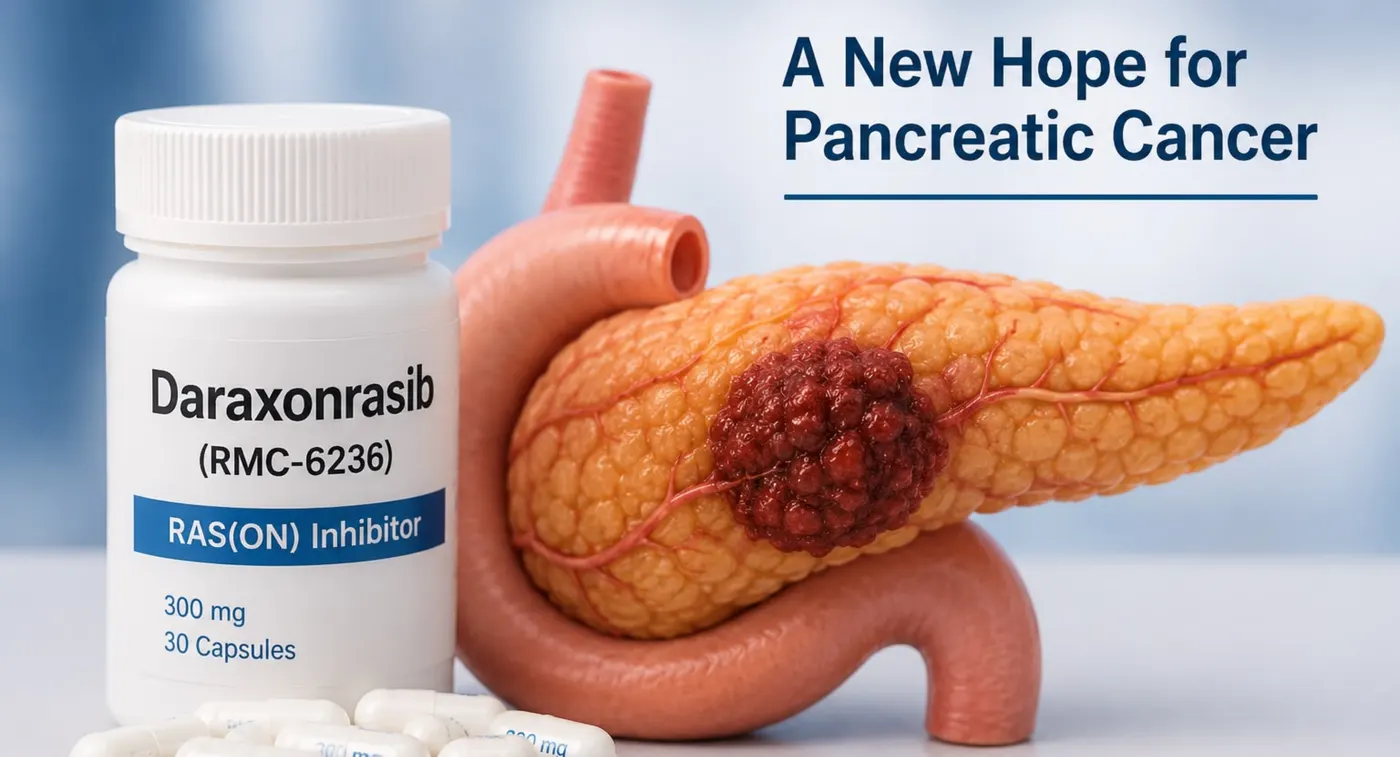
Daraxonrasib for Pancreatic Cancer: A Breakthrough That Is Changing Survival Outcomes
Pancreatic cancer is currently the third leading cause of cancer-related deaths worldwide. One of the biggest challenges is that the disease often develops silently, without obvious symptoms in its early stages.

Dr. Nishith VaddeboinaMedical Oncologist · Updated 7 July 2026 · 3 min read
On this page
- 01Why Is Pancreatic Cancer So Difficult to Treat?
- 02Why Daraxonrasib for Pancreatic Cancer Is Being Celebrated
- 03How Daraxonrasib Targets KRAS-Mutated Pancreatic Cancer
- 04What Did the Phase 3 Trial Show?
- 05Expert Insight from Dr. Nishith Vaddeboina
- 06What Does This Mean for Patients and Families?
- 07Conclusion: A New Era in Metastatic Pancreatic Cancer Treatment
Why Is Pancreatic Cancer So Difficult to Treat?
Pancreatic cancer is currently the third leading cause of cancer-related deaths worldwide. One of the biggest challenges is that the disease often develops silently, without obvious symptoms in its early stages.
Unfortunately, 80–85% of patients are diagnosed only after the cancer has already spread beyond the pancreas. Unlike breast, cervical, or colon cancer, there is currently no reliable routine screening test for pancreatic cancer. By the time symptoms such as abdominal pain, jaundice, weight loss, or digestive problems appear, the disease is often advanced.
Key Reasons for Poor Outcomes
- Late diagnosis in most patients
- No established screening test
- Few early warning symptoms
- Tumours located near major blood vessels, making surgery difficult
- High tendency to spread to the liver, lungs, and peritoneum
- Strong resistance to conventional chemotherapy
As a Yale cancer scientist once described:
She just felt a little bit of pain after she ate, and it turns out she had a monster inside her.
This quote highlights how silently pancreatic cancer can grow before being detected.
Why Daraxonrasib for Pancreatic Cancer Is Being Celebrated
For decades, treatment advances in metastatic pancreatic cancer have been limited. Even with modern chemotherapy regimens, the median survival for stage 4 pancreatic cancer typically remains between 8 and 12 months.
The need for better therapies has been urgent. While surgery offers the best chance of cure for early-stage disease, only about 10% of patients are diagnosed when surgery is still possible. Even among those who undergo successful surgery, recurrence rates remain high, with only 15–21% of patients remaining disease-free long term.
This reality underscores the aggressive biology of pancreatic cancer and the critical need for treatments that can improve survival in advanced disease.
How Daraxonrasib Targets KRAS-Mutated Pancreatic Cancer
More than 90% of pancreatic cancers contain KRAS mutations, including KRAS G12D, G12V, and G12R. For many years, KRAS was considered an undruggable target because scientists were unable to effectively block its activity.
Daraxonrasib is a novel RAS(ON) multi-selective inhibitor designed to target these cancer-driving mutations. By interfering with KRAS signaling pathways, the drug aims to slow tumor growth and improve patient outcomes.
Why This Matters
- Targets a mutation present in the vast majority of pancreatic cancers
- Addresses a biological driver of cancer growth
- Represents a new class of targeted therapy
- Opens the door for future precision medicine approaches in pancreatic cancer
What Did the Phase 3 Trial Show?
The Phase 3 clinical trial produced results that many experts consider historic for pancreatic cancer treatment.
Among previously treated patients with KRAS-mutated metastatic pancreatic cancer, the Phase 3 trial showed:
- Median overall survival of 13.2 months with Daraxonrasib
- Median overall survival of 6.7 months with standard chemotherapy
- Approximately 60% reduction in the risk of death
- Faster symptom improvement compared to conventional chemotherapy
Most importantly, this is the first treatment to demonstrate a significant survival benefit in metastatic pancreatic cancer in a pivotal Phase 3 trial.
Expert Insight from Dr. Nishith Vaddeboina
For years, pancreatic cancer has remained one of the most difficult cancers to treat effectively. The survival benefit seen with Daraxonrasib represents a meaningful advancement and offers renewed hope for patients with KRAS-mutated metastatic pancreatic cancer.
— Dr. Nishith Vaddeboina , Medical Oncologist, Hyderabad
What Does This Mean for Patients and Families?
While Daraxonrasib is currently being studied and utilized in previously treated patients, ongoing first-line clinical trials may further expand its role in pancreatic cancer treatment.
For patients diagnosed with stage 4 pancreatic cancer, even modest improvements in survival can be life-changing. The ability to extend life while potentially improving symptoms represents a major step forward.
Although more research is ongoing, Daraxonrasib has accomplished something that pancreatic cancer treatments have struggled to achieve for decades: a significant improvement in survival outcomes.
Conclusion: A New Era in Metastatic Pancreatic Cancer Treatment
Pancreatic cancer continues to be one of the most aggressive cancers, with low long-term survival rates and a high risk of recurrence. However, the emergence of Daraxonrasib for pancreatic cancer marks a significant breakthrough in the fight against this disease.
By targeting KRAS mutations and demonstrating a meaningful survival benefit, Daraxonrasib offers genuine hope for patients with metastatic pancreatic cancer and their families.
If you or a loved one has been diagnosed with pancreatic cancer, consulting an experienced medical oncologist can help you understand the latest treatment options and determine the most appropriate care plan.
Book a consultation with Dr. Nishith Vaddeboina , Medical Oncologist in Nallagandla, Hyderabad, to discuss advanced treatment options, targeted therapies, and personalized cancer care.
General education only. For advice about your own reports, request a consultation. See the editorial policy.
More from the clinic
All articles


Book a consultation
Discuss your reports, the options that may apply, and the next step. A message does not confirm the visit.